

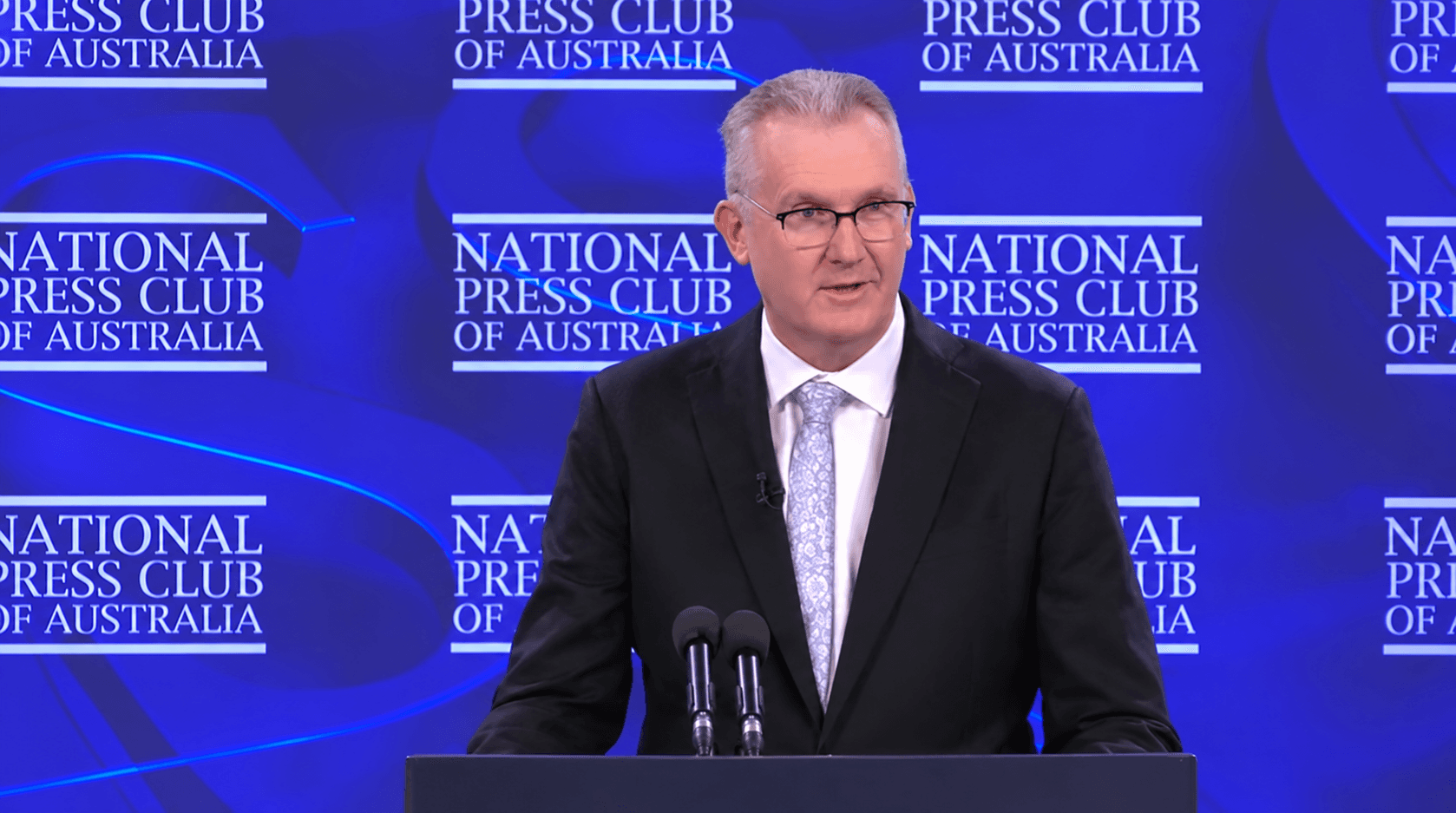
On Citizenship Day, Australia's Minister for Home Affairs and Immigration, Tony Burke, delivered a long-awaited address at the National Press Club. Titled "The Work of Managing the Migration Program: Who Arrives, Who Stays, Who Leaves," the speech unveiled a sweeping overhaul of Australia's migration system, changes that Burke himself admitted are "not as comprehensive as I would like them to be" due to legislative constraints.
Here is a complete breakdown of what was announced, why it matters, and what it means for Australia.
Background: Why This Overhaul?
Burke opened by affirming that immigration is fundamentally a strength to Australia. He rejected the "melting pot" metaphor in favour of an "orchestra", where different instruments work together in harmony.
But he acknowledged genuine problems that need addressing:
A demand-driven system, where employers and educational institutions determine intake, with an assumption that infrastructure and housing "will take care of themselves."
Visa hopping, people jumping from visa to visa to extend their stay, even though they would never qualify for permanent residency.
The housing crisis, which Burke insists is not caused by immigration, but immigration must be part of the solution.
Burke also dismantled several claims he labelled "absurd":
"Australia is a nation of mass migration", Burke noted Australia's population will be 700,000 smaller by 2030–31 than pre-pandemic projections.
"Backpackers are irrelevant to NOM", in fact, backpackers contributed 48,000 to net overseas migration last year.
"The government brings in yoga teachers, not construction workers", Burke stated construction workers have tripled from 4,500 to approximately 15,000, while yoga teachers brought in: zero. Yoga teachers are on the list because of a previous government deal with India.
The Reforms: Who Arrives, Who Stays, Who Leaves
1. Who Arrives
Points Test Overhaul
Redone in consultation with Treasury to maximize economic benefit from skilled visas.
Key change: Skilled workers in housing trades will receive the same points as university qualifications, to attract construction workers desperately needed.
Ministerial Direction 119 Updated
Priority processing added for: construction, agriculture, fisheries, resources, and teaching.
Working Holidaymaker Processing Restored
Normal processing restored for backpackers, except the UK due to rapid growth from 17,000 to approximately 80,000 since the FTA was signed.
Student & Graduate Visas
International students can no longer bring family members spouses or children, with exceptions for Pacific/Asian nations and PhD courses.
Families already onshore will not be broken up.
Expression of Interest System
Would help address demand-driven challenges, but requires legislation that is not currently available.
2. Who Stays
Ballot System for Backpacker Years 2 & 3
Year 2: Capped at 45,000 last year: 57,000 qualified.
Year 3: Capped at 5,000 last year: 31,000.
Regional work requirements unchanged: 88 days for Year 2, 6 months for Year 3.
Visitor Visas: "No Further Stay" Condition
Visitor visa holders must leave Australia and cannot apply for another visa while onshore.
This fixes a double standard where partners of Australian citizens waited years while tourists could switch to bridging visas.
Student Visas: Progression Rules
Extensions such as critical illness or institution closure remain unchanged.
Transfers at the same institution or level are allowed with a new visa application.
Progression: Students can only go up the qualification scale, such as from bachelor to master's. No more hopping down to dodgy providers to chase migration outcomes.
Disingenuous Protection Claims
80% of caseload comes from countries where 85%+ of applications fail.
Burke wants to address this but requires legislation.
3. Who Leaves
Migration Agents Code of Conduct
Agents who encourage non-meritorious claims can be sanctioned and deregistered.
Overstayers: Return to Pre-2015 System
Overstayers will be taken to detention centres and expected to book their own flight home.
Additional 100 compliance officers and 250 beds.
Not an ICE-style operation; it is a return to how Australia operated before 2015.
Behavioural change is the biggest outcome: previously 6–7 voluntary departures for every person detained.
Key Targets and Numbers
Category | Figure |
Current Net Overseas Migration (NOM) | 292,100 |
NOM target 2026/27 | 245,000 |
NOM target 2027–28 | 225,000 |
One Nation target | 130,000 |
Coalition target | 150,000–170,000 |
Student visas granted (2025) | ~337,000 |
Of those, for family members | ~45,000 |
Current overstayers in Australia | 77,000 |
Why the Reforms Are Not as Comprehensive as Desired
Burke openly admitted the reforms are "not as comprehensive as I would like them to be" because many levers require legislation, and a deal with the Coalition appears unlikely.
He refused to introduce legislation that would cause a "perverse, immediate behavioural change" against the national interest, as has happened with immigration law in the past.
However, he argued that his political opponents would also be unable to implement the full powers they propose without the same legislation.
Economic and Housing Impact
Burke rejected the narrative that immigration causes the housing crisis. He pointed out that since the Hawke era:
Australia's population grew 75%.
The number of homes grew 100%.
Household size dropped from 2.9 to 2.5 people.
Every 0.1 drop in household size means 450,000 additional homes are needed.
"Immigration is not putting further pressure on housing at the moment," Burke said. "But we need immigration to soften enough that housing has a chance to catch up."
He also warned that deep migration cuts would "trash" health, aged care, and construction, noting:
50% of doctors come with families.
50% of construction workers come with families.
Two-thirds of nurses and aged care workers come with families.
Q&A: Frequently Asked Questions
Q: What is the main goal of these reforms?
A: To bring Net Overseas Migration down from 292,100 to 225,000 by 2028, focusing on temporary visas (visitor, student, backpacker) and enforcement against overstayers.
Q: Can international students still bring family?
A: No, except for certain Pacific/Asian nations and PhD programs. Families already in Australia will not be separated.
Q: What happens to backpackers wanting to extend?
A: They must meet the same regional work requirements but now enter a ballot system. Year 2 is capped at 45,000, and Year 3 is capped at 5,000.
Q: What is the "no further stay" condition on visitor visas?
A: Visitor visa holders cannot apply for another visa while in Australia. They must leave first.
Q: Does this mean Australia is closing the door to immigration?
A: No. Burke stressed immigration is a fundamental strength. These reforms are about controlling the system, not shutting it down. Australia still needs skilled workers, especially in construction, health, and aged care.
Q: Why aren't the reforms more comprehensive?
A: Many changes require legislation, and negotiations with the Coalition have not succeeded. Burke refused to introduce legislation that would cause negative behavioural change before it passes.
Q: What's the impact on rent prices?
A: Burke said the reforms put upward pressure on housing supply and downward pressure on rents by boosting supply and reducing demand.
Q: Is this a response to political pressure from One Nation?
A: Burke denies it. He says work on these policies began in February, well before the current political pressure.
Q: What happens to overstayers?
A: They will be taken to detention centres and expected to book their own flight home — a return to the pre-2015 system. An additional 100 compliance officers and 250 beds are being provided.
Q: Will visas for India under the FTA change?
A: No. Burke confirmed all free trade agreements are being respected, including concessions for India.
Q: What about partners of Australian citizens waiting for spouse visas?
A: Spouse visas still have long waits. However, the visitor visa change will make it easier for partners to visit each other while waiting.
Conclusion
Tony Burke's migration overhaul is the most significant in years. With a focus on temporary visas and enforcement, the government is trying to show it controls the system rather than letting it be driven purely by demand.
But Burke himself admits that without legislation, the reforms are incomplete. Some of the most powerful tools, such as an Expression of Interest system and handling of disingenuous protection claims, cannot be implemented.
This article is based on the transcript of Tony Burke's National Press Club address and the Q&A session that followed. (24) IN FULL: Immigration Minister Tony Burke speaks about Labor's plans for migration | ABC NEWS - YouTube